
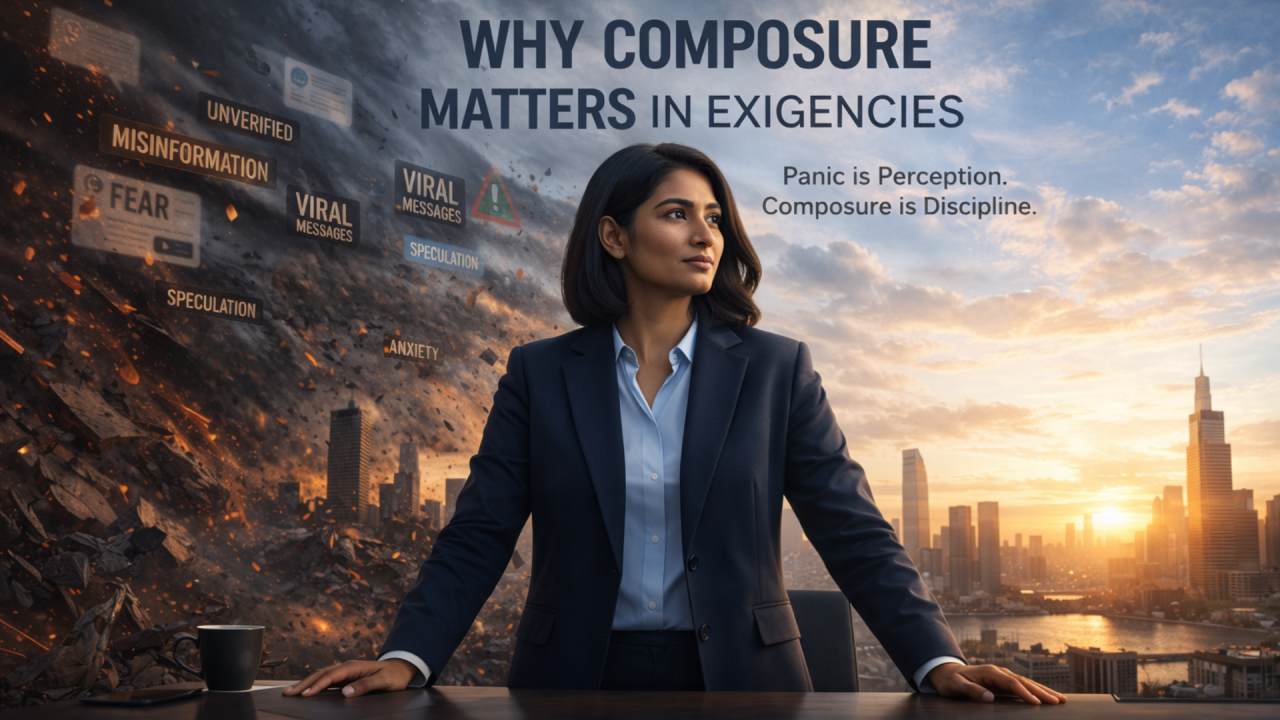
 Recent developments in our region have revealed a familiar pattern in how certain sections of society react to unfolding crises: the rapid spread of panic, exaggerated reactions, and being engulfed by overwhelming misinformation. Despite widespread composure and statesmanship demonstrated by leaders and assurances from the government authorities that were ensuring safety, security, and overall support, people were quick to descend into panic mode.
What the Past Teaches Us about Resilience
Events like this have been part and parcel of human history. Wars, natural tragedies, and family exigencies serve as a reminder of the embodiment of our resilient character and values. Time and again, we have witnessed the region’s resilience, especially in the UAE, where both leadership and infrastructure act as an iron dome, assuring a people-first approach. As a resident of this country for over three decades, I am not a stranger to crises. I drew on lessons from the past, of the overwhelming commitment that the local leadership has demonstrated over the years in moments of unease, and so I responded with calmness.
Age of Misinformation
In this age of overwhelming information, the speed and scale with which fear travels is indeed intimidating and feeds into a panic frenzy. A single unverified message, a forwarded video stripped of context, or a rumor wrapped in dramatic language can reach thousands of phone screens within minutes. By the time facts emerge, anxiety has already taken root, especially among the usual suspects. This is where we need to dissect truth from false and exaggerated narratives.
Panic is rarely the product of facts; it is usually the result of perception, speculation, and emotional amplification fuelled by misinformation. When individuals react impulsively to incomplete information, they inadvertently contribute to a cycle in which fear feeds on itself. In this process, reason becomes a casualty. With a surge in AI use, we often see problematic visuals on social media that distort facts, preventing users from engaging in independent news analysis. I notice that often the information is either scanty or insufficient, or it is explosive. While AI can surely give you a measured response, one must engage their critical thinking to inform a more holistic view of the scenario.
Stop. Pause. Think then React
Maturity in public behavior is reflected not in how loudly one reacts, but in how thoughtfully one pauses. The ability to differentiate between credible information and rumor is no longer merely an intellectual skill; I strongly maintain that it should be a civic duty stemming from our social responsibility. Yet I increasingly witness individuals who forward alarming messages without context, comment on complex geopolitical situations without understanding them, and amplify narratives detached from factual reality.
This tendency reflects a troubling lack of depth in public discourse. In an age when information is abundantly available, wisdom seems to have been lost between the lines, becoming increasingly scarce. True understanding requires patience, reading and analyzing beyond headlines, examining sources, and appreciating the complexity of events. The world is rarely as simple as a viral message suggests. I always ask people to look beneath the surface.
I want people to know that panic undermines community resilience. Societies function best when people remain calm, rational, and grounded in reality. Overreaction does not strengthen preparedness; it weakens collective stability. Businesses, institutions, and communities rely on composed judgment, not emotional volatility.
History repeatedly reminds us that crises are not defined solely by external threats but also by how we respond to exigencies. The character of a society reveals itself in moments of duress or, for that matter, adversity. Are people guided by judgment, or by impulse? Do they seek facts, or simply narratives that satisfy their anxieties?
So, what then should be done?
The Case for Calm Leadership in Crisis
Leadership, whether at a national, organizational, or community level, has always been anchored in composure, and this is what I expect from every responsible person. It is what I call a resilient mindset. Calm thinking during uncertain times is what distinguishes resilient societies from fragile ones. Especially when individuals or those in positions of influence abandon reason and succumb to rumor, they fail to guide and steer and instead add to the chaos.
Equally important is the responsibility of individuals to cultivate informational discipline. Before sharing a message, one simple question should be asked: Is this verified? If the answer is uncertain, silence may be the wiser choice. In any exigency situation, it is expected of leadership and the people at large to exercise restraint in communication, as this is often a greater service to society than impulsive outbursts.
Here’s my Crisis Playbook
- The first and most important step is practicing calm verification. In the digital age, information spreads faster than the truth. Responsible citizens must resist the temptation to become carriers of unverified content. A moment spent verifying a source can prevent thousands from being unnecessarily alarmed.
- Second, individuals must develop a discipline of emotional restraint. Not every development requires dramatic interpretation. Mature societies learn to observe events with balance, allowing institutions and credible channels to provide clarity before drawing conclusions.
- Third, we must rebuild a culture of thoughtful discourse. Opinions are valuable when they are informed, not when they are impulsive. Depth of thinking – reading, understanding context, and appreciating complexity – is the antidote to rumor-driven reactions.
- Finally, people must recognize that resilience is built on collective composure and a farsighted approach. When citizens remain calm, responsible, and fact-driven, societies become stronger and more stable. Panic weakens the social fabric; composure strengthens it.
In uncertain times, the real test of maturity is not how quickly we react, but how wisely we respond with actions, not just muted actions. The choice between panic and perspective ultimately defines the character of individuals and the strength of the society they represent.