
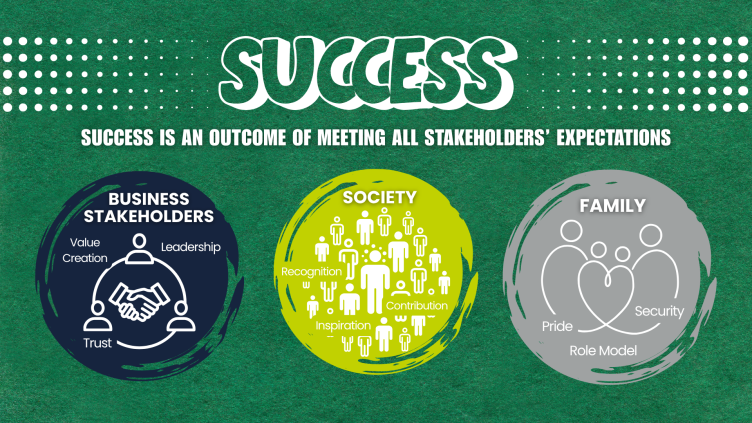
I am often asked what success means to me. Does it emanate from a title and its empowerment, or is it the wealth that one can amass? Is it material possessions, prestige, or fame? Some suggest that success can be measured through the eyes of those who love you or in your ability to meet the expectations of those who admire and look up to you.
However, for me, success is not benchmarked solely against personal accomplishments or accolades. It is about the meaningful impact of our actions, whether in relationships with family and friends, in our professional roles, or in meeting stakeholder expectations and demonstrating empathy and compassion towards others. Success should reflect our impact on multiple levels; it must be holistic and sincere, representing a broader influence rather than just a few select criteria.
The true meaning of success is deeply personal and often evolves. At its core, it can be defined as living in alignment with your values and purpose. This means doing what truly matters to you—not just what impresses others; continually growing in knowledge, wisdom, or character; contributing meaningfully to other people, your community, or the world; and above all, experiencing fulfilment – not just achievement or material gain.
I believe that success should be rooted in people; in their character, their actions, and the consequences of those actions. It should not weaken individuals through glory, arrogance, or extravagance. I often see people indulge in self-glorification, while ignoring basic ethics in their behavior and relationships.
What bothers me at times is when the true merits of success are contravened or circumvented. I emphasize that success must be earned. When success comes by default, without merit, effort, or readiness, it can become problematic and carries risks. Decisions can become influenced by entitlement, ego, or ignorance rather than insight, strategy, or discipline, which can lead to costly missteps.
The issue with default success is that it creates a false sense of achievement and exposes individuals to deeper vulnerabilities. It masks fundamental competency gaps, leading others to believe someone is capable when, in reality, they may lack the skills, resilience, or maturity necessary to lead, grow, or sustain their role. This is a common problem in modern society, where many live under such false assumptions.
Default success also erodes meritocracy, allowing mediocrity to overshadow merit. When people observe that success is awarded without merit, it leads to a loss of confidence in the merit system, demoralizing individuals and destabilizing organizations striving for excellence.
This also creates vulnerability. Without the hard-earned experience and resilience gained from struggle or failure, those who achieve success by default are often unprepared for the pressure, crises, or complexities that inevitably arise in professional and personal life. When challenged, they are more likely to collapse than to adapt.
An essential element to recognize is that shallow success can undermine credibility in the eyes of others, resulting in reputational harm. In Hindi, we use the phrase “do din ki chandni”, which roughly translates to “a brief period of glory or brightness”. In other words, default success is a silent liability, appearing strong on the surface but often lacking the depth.
True success is about aligning the interests and expectations of all stakeholders, and it is assessed through the impact of individual actions rather than the accumulation of power, wealth, or fame driven by self-interest.
I always encourage my family and colleagues to take impactful actions that deliver results. One should measure success through meaningful milestones and goals, whether it is family happiness, goodwill, respect earned within the community, or professional accomplishments that contribute to true sustainability as a business leader. For me, success is not a single element but a combination of all these factors.