
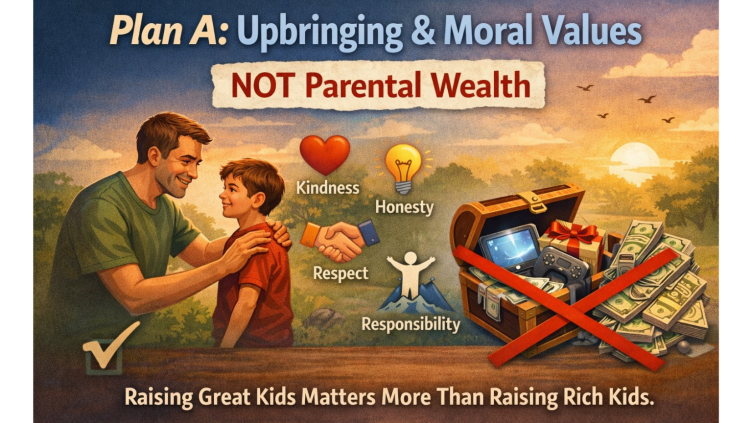
As parents, it is important to pause and reflect on what our success truly means for our children. Wealth, recognition, and social standing may define our journeys, but they should never define theirs. The true yardstick of success for our children is not what they inherit, but who they become.
No matter how accomplished a parent may be, whether through business success, professional stature, or financial security, these achievements should never become a safety net for a child’s future. A child’s real security lies in their own character, resilience, and ability to stand on their own feet. Yet, too often, parents speak proudly of what they will leave behind, sometimes even wearing it as a badge. While well-intentioned, this mindset can quietly weaken a child’s inner strength.
We need to raise children who respect what their parents have achieved, but aren’t defined by it. They should appreciate the comfort they have, but also learn to be resilient and go beyond material security. Wealth can open doors, but values are what truly build ability.
People often measure success by results, like building businesses, creating wealth, or leaving a legacy. These things can make parents proud, but they shouldn’t be the main lessons for children. If kids learn to see success only as outcomes, they may lose resilience. The best legacy parents can give is strong character and a solid upbringing.
Raising children with plenty brings a hidden risk. If we don’t focus on values, comfort can take the place of character. When wealth is the main plan, kids miss out on the experiences that build empathy, perseverance, and self-confidence. No matter the culture or generation, parents should emphasize to their children that values come first, wealth might follow, or it might not.
Children need to understand that inheritance, privilege, and legacy are not the main plan. Their character and actions should be. This lesson can’t just be told to them; it has to be shown and experienced. Kids shouldn’t see their parents’ lifestyle as a model for their own identity, but as a starting point to create something meaningful themselves.
Make Character the Primary Inheritance
Children should learn early that integrity, discipline, and humility are essential. Money can come and go, or be inherited, but character has to be built, often through facing challenges.
Parents should not shield children from difficulty. In doing so, we unintentionally deny them the resilience they will need later in life. Let children fail in safe environments. Let them experience small wins and small losses. Through this, they learn patience, effort, and perspective. Respect is not inherited through a surname, but it is earned through conduct.
Teach Effort Before Entitlement
Having more should give children more opportunities, not make them try less. Privilege isn’t a free pass; it’s a responsibility.
Simple experiences, like short tasks, internships, volunteering, or chores at home, show kids that effort comes before reward. The goal is to help them build skills, not make life harder. When children learn to take responsibility early, confidence grows naturally.
Normalize Humility in Success
One of the best things parents can give is perspective. Seeing different ways of life helps children develop gratitude and empathy. When kids realize that success is a blessing, not something they’re owed, they become leaders who want to help others, not just be in charge.
Humility isn’t something you learn in a classroom. Kids pick it up by living life and watching how their parents treat others, especially people with less. Children learn values from their surroundings, not from speeches.
Keep Wealth Invisible in Upbringing
Parents should talk about money in a thoughtful way, not show it off. Kids shouldn’t see money as something that gives them special rights, but should learn what it’s for and its limits.
Many families choose not to show off their wealth. When kids aren’t always reminded of what they have, they become more motivated from within. They start to think about what they can create, not just what they can get.
Wealth should stay in the background. It can be a backup plan, but it shouldn’t be the base of a child’s identity.
Anchor Them to Purpose, Not Possessions
Kids who grow up with a sense of purpose are much more resilient than those who only know comfort. Show them bigger ideas, like giving back, being responsible, being creative, and making a difference.
A child who knows their own purpose, separate from family wealth, won’t feel lost. Even if the money is gone, they will still have direction.
Practice the Values You Wish to See in Your Children
Children notice everything, and they learn much more from what parents do than what they say. The way parents treat others, handle problems, keep promises, and act in private teaches kids the most.
Parents’ lives are the real curriculum. How they act is the lesson.
Wealth can be a backup, but it shouldn’t guide a child’s life. Children should know their value comes from what they create themselves, not from what they inherit.
Even if wealth is never used but values last, you have succeeded. A legacy based on character can’t be erased by any market change, disruption, or loss.
To conclude, raising children is not about securing their comfort; it is about securing their compass. Life has its highs and lows where fortunes change, social status fades, but character endures. When upbringing and moral values are made Plan A, children grow into adults who can navigate uncertainty with dignity, humility, and purpose.
If our children can stand tall without leaning on our names, our networks, or our wealth, then we have truly prepared them for life. When they choose integrity over shortcuts, effort over entitlement, and purpose over possessions, then they just prosper, and our influence through upbringing is far more valuable than inheritance.
Our wealth may offer protection, but it is the espoused values that offer direction and carry a person forward.
When children build their own lives on the foundation of character, even wealth, if it comes, will sit lightly on their shoulders. But if it never does, they will still stand strong. I strongly believe that for parents, this is real success and it is the legacy that lasts.