
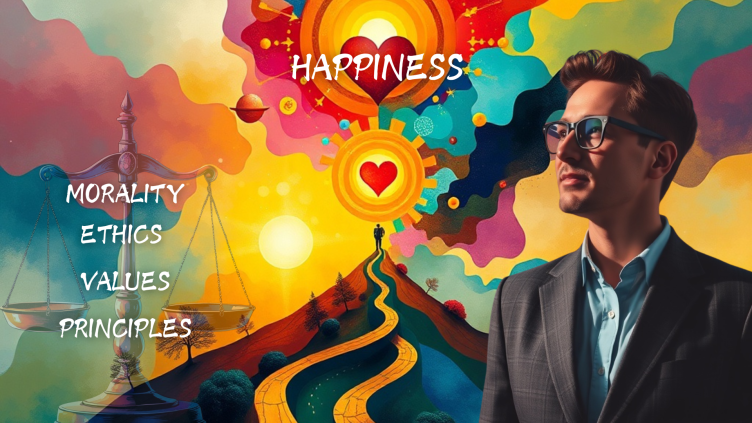
We are indeed living in a world that is very different from what is morally and ethically professed. Hypocrisy, double standards, deception, and pseudonymity are no more distinct. Until recently, we often associated these issues with specific societies or cultures, but now we observe them rampant across all levels, with deep erosion from top to bottom, whether it is among statesmen or the larger leadership quadrant, as well as in society.
Many of us have been raised in cultures where societal perceptions prevail over individual opinions. Values are often widely professed but not always practised. We live in a world where morals and ethics are in steep decline, particularly among those in positions of power who act in disparaging ways. What we once viewed as primarily used in the political realm is now pervasive throughout society.
I was raised amid these social conflicts, which taught me early on how to navigate them in my quest for truth. While people often attribute this phenomenon to conservative societies, I see it across all sections of society, unfortunately, embedded in the mainstream. In this environment, life is often not lived on one’s own terms but rather according to societal expectations. Narratives like “log kya kehenge” (what will others say?), “zamane me rehnahain” (we have to fit into society), and “duniya waley ko kya dikhayengey” (what will we show to the world?) echo the pressure of societal approval.
Here, expectations are not always based on your espoused values or truth but on how society perceives those values. This often leads to a false pretence, as the fear of judgment from others can dissuade you from making conscious decisions, even at the cost of living a lie.
I often observe people inflicting self-pain or burdening themselves with inner dissent and guilt just to impress others or conform to societal expectations. Another issue is camouflaging, where individuals conceal their true intentions or feelings behind a facade of righteousness or moral uprightness. In Urdu, we refer to this as “riakari”, and in Hindi, “kehna kuch, karna kuch”.
In this ecosystem, we often see the mask of morality and ethics that people assume. They preach morality that they seldom practice. Many act religiously, respectfully or with discipline more as a facade, while behind closed doors, they disregard these principles. They might talk about religion and urge others to follow it, yet they show little concern for their own abrasive actions, whether it relates to compassion for others, practising equality, or upholding self-respect. This behavior exhibits sanctimoniousness, a display of exaggerated piety or moral virtue without genuine goodness.
What worries me is that these practices are becoming increasingly prevalent, deep-rooted in societies and corrupting mindsets, leading to moral degeneration. People often speak about honesty while lying for convenience. They promote simplicity yet compete in the pursuit of material possessions. A common issue I see in our society is self-righteousness, individuals believing themselves to be morally superior to others and condemning those who do not conform to their standards.
In everyday contexts, it’s common to witness people indulging in self-glory based on false values. Whether through extravagant lifestyles, showbiz in weddings, or family possessions, individuals often engage in unethical means just for material pleasure. Do they realize that these pursuits cause them self-inflicted pain and guilt?
The pressure to please others is especially emphatic in individual contexts. Here, societal opinions take centre stage in people’s lives, with distorted priorities; what others say often matters more than how one or their family feels. This might manifest in body-shaming siblings based on societal perceptions of skin color or career choices. Regardless of family preferences, many feel compelled to make choices that align with societal expectations. Families may push their children to marry, not out of love or understanding but out of fear of what others will think, adhering to conventional norms regarding age, income, and perceived family status.
For instance, women are often judged for their choices based on superficial criteria, such as how they dress or speak, while men are assessed based on entirely different standards. There is no standard yardstick for evaluating true merits in these observations; everything is staged according to societal perceptions.
This is where pretence rules: feigning to be someone they are not or pretending to hold beliefs they do not hold, being two-faced, and presenting a different image to different people depending on the social context.
Unfortunately, in these cultures, sycophancy prevails, where people often patronize wealth, extravagance and power. Even when they disagree deep down, many still conform. Instead of speaking the truth, individuals tend to say what others want to hear. Rather than standing up for what is right, many choose to remain silent to maintain social peace or to stay in the good graces of those in power, whether individuals in high places, politicians, media or general civil society.
It is essential to recognize that superficial values carry deep consequences. The societal expectations placed on individuals are often shallow. A girl with dreams may be forced into marriage, while a boy with talent may be pushed into a family business. Living differently is often seen as rebellion, and following one’s heart can be viewed as a selfish act. Rarely do people introspect on these issues to understand their impact. Many suffer silently, leading to mental health breakdowns.
Hope for change in these societies is often shrouded with cynicism, as such change is regarded negatively. It is labelled an erosion of their pseudo-value system rather than being embraced as a long-overdue reform.
However, I see a glimmer of hope as change begins to emerge, indicating that not everyone is following this blind path. Some people with rebellious and transformative mindsets are trying to change. With the rise of millennials and Gen Z, there is an increase in the number of individuals who are beginning to speak up. They are taking charge of their careers, relationships, and lifestyle choices in ways that bring them happiness rather than simply conforming. They are asking tough questions and slowly breaking free from the confines of societal judgment.
In conclusion, where living by the fundamental rules of society, which profess common sense and logic, is acceptable, it should not lead to self-imposed agony and pain. Respecting cultural sensitivities is important, but it should not mean ignoring the truth of what is genuinely wrong. In such contexts, there is a need to move beyond hypocrisy and superficiality, embracing the real values of honesty, empathy, freedom, and respect for individuality. Only then can people truly live — not just exist.