
FMs to transcend beyond client satisfaction and contract management.
I have always emphasized the dominant role of FMs in the facilities management industry, as they are at the epicenter of any FM engagement. I believe they are the key differentiators for the unique selling proposition of any facility management company or, for that matter, for clients looking to derive the requisite impact of quality FM service engagement. Good pedigree FMs are crucial for building a robust FM regime. Whether on the client or service provider side, FMs play a significant role in driving sustainable service delivery and crowning the service provider with a competitive advantage and stellar performance in securing a reputation to last.
When selecting a Facilities Manager, industry professionals must consider more than just previous experience and qualifications. Finding the right fit for the role is important, someone who can manage contracts effectively and lead themselves and their teams through strategic and tactical engagements. In the FM industry, the typical job description of an FM includes contract management, which focuses on contract governance, administration, and SLA compliance. Their key performance indicator demands that they transcend beyond project operations to meeting other requirements that include budgets, compliances, innovation and development of their teams. Beyond contract-centricity, FMs have other roles to play. However, this often gets lost by an emphatic client engagement and satisfaction narrative overriding other merits. In the pursuit of upending client satisfaction and contract management, they must tread carefully to align their employer’s commercial and compliance interests.
How often do I come across such situations where clients assess the performance of Facilities Managers and their contracts through a microscopic lens, concentrating solely on their routine needs? Unfortunately, client satisfaction cannot be the only yardstick of an exemplary FM. Clients may have other priorities that may contravene actual merits, including critical elements such as governance, industry best practices adherence, and budgetary alignments. Therefore, effective contract management alone is not a comprehensive measure of a good FM.
One distinct factor that significantly influences client retention is the value addition to the contract, and FMs must consistently demonstrate this capability. In my experience at EFS, this has been a unique selling proposition (USP) that significantly helps in customer retention. EFS has maintained an impressive record of 97% client retention over the last 15 years, which is evidence of my contention.
Good performance management criteria for FMs include multiple indicators such as effective people engagement, sound commercial prudence and comprehensive risk mitigation measures. They require skills ranging from good organizational abilities to leadership traits like critical thinking, problem-solving, emotional intelligence, and technical competence. An FM must go beyond routine engagement to develop effective and innovative strategies to upend FM impact, meeting all stakeholders’ expectations from clients, end-users and compliance with the company’s commercial interests. A good FM must also maintain a robust team engagement with an eye on their development and progression, as people development is critical to building a future workforce. I have always asserted that a good Facilities Manager not only contributes to contract retention but also plays a vital role in building a strong people organization with a skilled and engaged frontline workforce. To summarize, a competent FM should possess a combination of technical, interpersonal, and organizational skills to ensure the efficient operation and maintenance of buildings and their services.
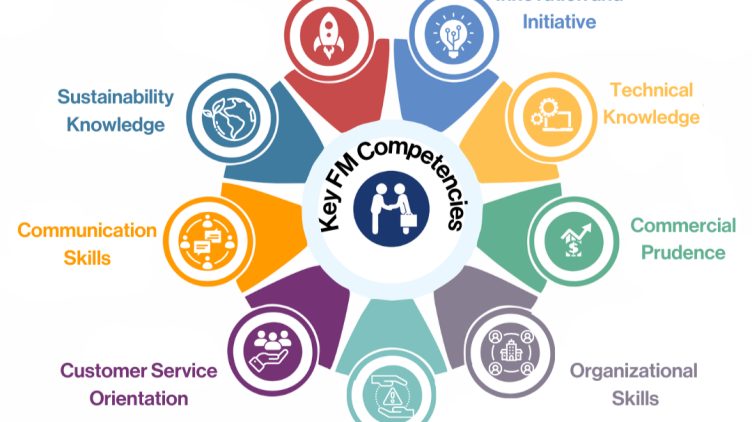
Key competencies include:
- Organizational Skills: The ability to manage multiple tasks, projects, and priorities effectively is crucial for ensuring smooth operations and timely completion of maintenance and repairs. Attention to detail ensures that all aspects of facilities management, from cleanliness to safety compliance, are meticulously addressed. Time management is essential in this task-based business, allowing the FM to prioritize tasks, manage deadlines, and promptly handle emergencies or unexpected issues. It must be noted that these organizational skills will help FMs to grow individually whilst also becoming the resource in building the company’s future leadership capabilities. They also must be able to deal with various stakeholders, such as suppliers, for effective contract engagement, sourcing and negotiations.
- Leadership: An effective FM should have the ability to lead and coordinate a team, contractors, and other stakeholders to ensure efficient and collaborative work. Critical thinking and problem-solving ability to successfully diagnose issues and find practical solutions to facility-related problems is also vital for an FM.
- Technical Knowledge: A solid understanding of building systems (HVAC, electrical, plumbing, critical engineering), relevant building codes, safety regulations, and industry best practices is necessary. While formal qualifications are beneficial, they are not the only criteria; a deep understanding of these areas is essential. I do not maintain that only technically qualified individuals can be FMs; they could be from generic domains, as knowledge holds more weight than qualifications alone.
- Commercial Prudence: Strong commercial acumen is required for managing operational budgets, tracking expenses, and optimizing cost-effectiveness while maintaining quality standards. FMs must possess a strong understanding of intrinsic cost management to identify all revenue optimization opportunities within the contract. This includes mapping clients’ ancillary spent with an eye on variation revenues such as project works, fit-outs and other miscellaneous spent.
- Risk Acumen: A good FM must have the ability to assess and assimilate the risks and opportunities within the contract and the engagement at large and ensure that measures are taken to safeguard the organization, client, and team against compliance, safety, or commercial risks. Their role involved developing risk management plans, implementing risk mitigation measures, and monitoring risk performance.
- Communication Skills: Clear and effective communication with staff, vendors, and stakeholders is essential for smooth operations, addressing concerns, and reporting progress.
- Sustainability Knowledge: Understanding sustainability has become integral to the FM role. Awareness of energy-saving practices, sustainability initiatives, and green building standards is essential to minimize ecological impact. ESG framework is vital to modern-day FM needs. Therefore, FMs must have the requisite knowledge of it.
- Customer Service Orientation: Focusing on the comfort and safety of building occupants is a critical aspect of the FM role. Emphasizing responsiveness and addressing occupant needs are important for effective service. Their requisite attention to detail in managing day-to-day escalations is an important feature that they must know.
- Technology, Innovation and Initiative: Providing value-added benefits to clients and contracts through cost savings, technology optimization, and managing additional project work is crucial for an FM. Most new-generation FM contracts demand innovation in terms of the glide path of savings and other initiatives. At EFS, this is one major KPI we scored high on in our contract retention track record.
These competencies help Facilities Managers maintain a safe, efficient, and well-functioning environment for all users of the space. By embodying these principles, an FM can contribute to building a robust service organization, drive profits, manage risks and create a future-ready workforce from leadership down to supervisors.